René Descartes (1596–1650)
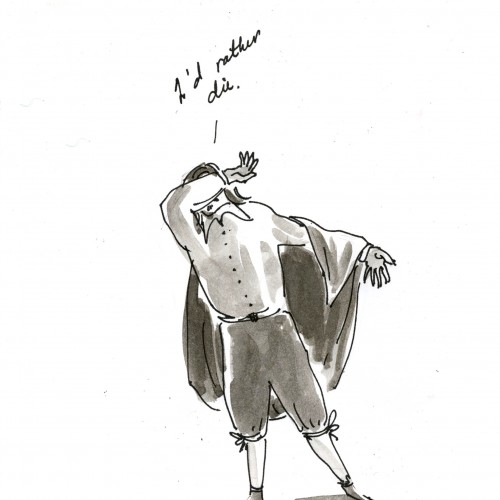
Descartes was a late riser. The French philosopher liked to sleep until mid-morning, then linger in bed, thinking and writing, until 11:00 or so.
His comfortable bachelor’s life ended abruptly in late 1649, Descartes accepted a position in the court of Queen Christina of Sweden.
Descartes accepted a position in the court of Queen Christina of Sweden,Arriving in Sweden, in time for one of the coldest winters in memory, Descartes was notified that his lessons to Queen Christina would take place in the mornings—beginning at 5:00 A.M. He had no choice but to obey. But the early hours and bitter cold were too much for him. After only a month on the new schedule, Descartes fell ill, apparently of pneumonia; ten days later he was dead.
- From Daily Rituals: How Artists Work by Mason Currey
“Dubito, ergo cogito, ergo sum.
(English: "I doubt, therefore I think, therefore I am")”
― Rene Descartes
#dailyrituals #inktober #reneDescartes @masoncurrey #wouldratherdiethangetupearly
P. G. Wodehouse (1881–1975)
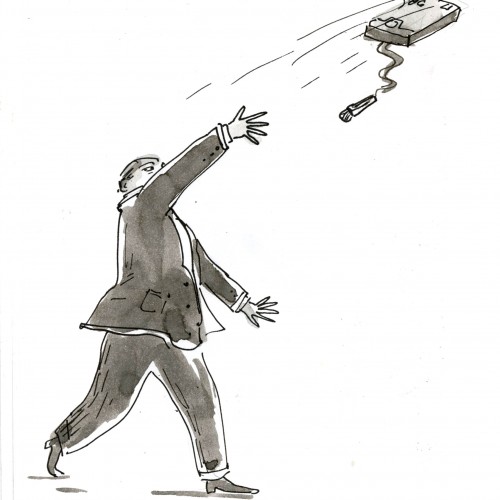
Once, when he was beginning a Wooster-Jeeves novel, he experimented with using a Dictaphone. After he had dictated the equivalent of a page, he played it back to check it over. What he heard sounded so terribly unfunny that he immediately turned off the machine and went back to his pad and pencil.
After this, according to the biographer Robert McCrum, “he might snooze a bit in his armchair, have a bath, and do some more work, before the evening cocktail (sherry for her, a lethal martini for him) at six, which they took in the sun parlour, overlooking the garden.
- From Daily Rituals: How Artists Work by Mason Currey
“He had just about enough intelligence to open his mouth when he wanted to eat, but certainly no more.”
― P.G. Wodehouse
#dailyrituals #inktober #PGWodehouse @masoncurrey
Herman Melville (1819–1891)
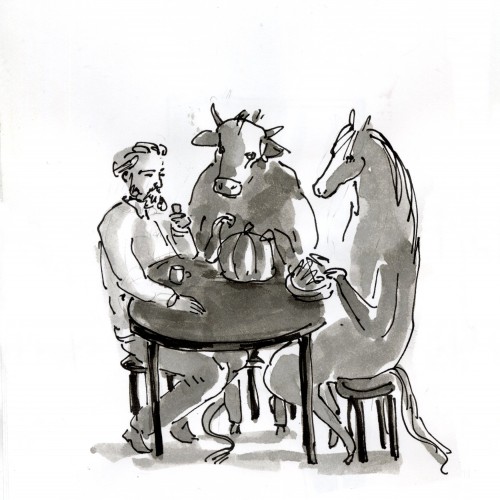
"I rise at eight—thereabouts—& go to my barn—say good-morning to the horse, & give him his breakfast. (It goes to my heart to give him a cold one, but it can’t be helped.) Then, pay a visit to my cow—cut up a pumpkin or two for her, & stand by to see her eat it—for it’s a pleasant sight to see a cow move her jaws—she does it so mildly & with such a sanctity."
- From Daily Rituals: How Artists Work by Mason Currey
“I would prefer not to.”
― Herman Melville, Bartleby the Scrivener
“A smile is the chosen vehicle of all ambiguities.”
― Herman Melville, Pierre; or, The Ambiguities
#dailyrituals #inktober #HermanMelville @masoncurrey
Louise Bourgeois (1911–2010)
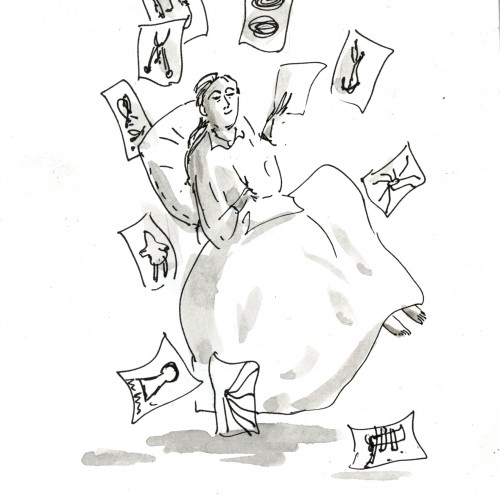
“My life has been regulated by insomnia,” Bourgeois told an interviewer in 1993. “It’s something that I have never been able to understand, but I accept it.” Bourgeois learned to use these sleepless hours productively, propped up in bed with her “drawing diary,” listening to music or the hum of traffic on the streets.
“Each day is new, so each drawing—with words written on the back—lets me know how I’m doing,” she said. “I now have 110 drawing-diary pages, but I’ll probably destroy some.
- From Daily Rituals: How Artists Work by Mason Currey
“I am not what I am, I am what I do with my hands...”
― Louise Bourgeois
“Every day you have to abandon your past or accept it, and then, if you cannot accept it, you become a sculptor.”
― Louise Bourgeois
#dailyrituals #inktober #LouiseBourgeois @masoncurrey
Woody Allen (b. 1935)
I’ve found over the years that any momentary change stimulates a fresh burst of mental energy. So if I’m in this room and then I go into the other room, it helps me. If I go outside to the street, it’s a huge help. If I go up and take a shower it’s a big help. So I sometimes take extra showers.
“I think in the cracks all the time,” he has said. “I never stop.”
- From Daily Rituals: How Artists Work by Mason Currey
“Some guy hit my fender the other day, and I said unto him, 'Be fruitful, and multiply'. But not in those words.”
― Woody Allen
#dailyrituals #inktober #Woody Allen @masoncurrey
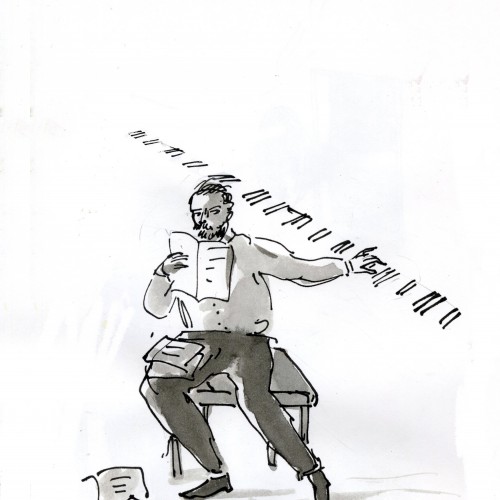
Pyotr Ilich Tchaikovsky (1840–1893)
At 9:30, Tchaikovsky set to work—composing at the piano only after he had dealt with any proofs or his correspondence, chores that he disliked. “Before setting about the pleasant task,” his brother noted, “Pyotr Ilich always hastened to get rid of the unpleasant.”
After lunch he went for a long walk, regardless of the weather. His brother writes, “Somewhere at sometime he had discovered that a man needs a two-hour walk for his health, and his observance of this rule was pedantic and superstitious, as though if he returned five minutes early he would fall ill, and unbelievable misfortunes of some sort would ensue.”
- From Daily Rituals: How Artists Work by Mason Currey
“Truly there would be reason to go mad were it not for music.”
― Peter Ilyich Tchaikovsky
“If you do not want to write, at least spit on a piece of paper, put it in an envelope, and send it to me. You are not taking any notice of me at all. God forgive you – all I wanted was a few words from you.”
― Pyotr Ilyich Tchaikovsky
#dailyrituals #inktober #PeterTchaikovsky @masoncurrey
As a dedicated family man, I can confidently say that every day of my life is a testament to my unwavering commitment to providing for my loved ones. Just like the daily rituals of grooming my hair, I work tirelessly to ensure that my wife and children are well taken care of. The routine can be grueling at times, but the knowledge that I am working towards a better life for them keeps me motivated and driven. In my quest to secure a brighter financial future, I often find myself exploring various investment opportunities. Social media platforms, such as Twitter, have become a vital source of information, allowing me to stay updated on the latest trends and investment options. However, my foray into the world of online investments took an unexpected turn when I stumbled upon a platform that promised unusually high returns. Despite my initial reservations, I decided to take a chance, investing a significant portion of my hard-earned savings.
Unfortunately, my gamble did not pay off, and I found myself facing a substantial financial loss. The experience was nothing short of devastating, as I had worked tirelessly to accumulate the money that I had invested. The thought of having to break the news to my family was daunting, and I couldn't help but feel a sense of failure and despair. It was during this dark period that I discovered a reputable company specializing in asset recovery, Bitcoin Salvage Asset Recovery. Their expertise and professionalism were a beacon of hope in a time of desperation. With their guidance and support, I was able to recover a significant portion of my lost investment, which was a huge relief. My experience has taught me the importance of caution and diligence when navigating the complex world of online investments. While the allure of high returns can be tempting, it is essential to prioritize prudence and thoroughly research any investment opportunity before committing. I am grateful for the lessons learned and the assistance provided by Bitcoin Salvage Asset Recovery, which has helped me to regain my footing and continue working towards a secure financial future for my family. All thanks to Salvage Asset Recovery. you can visit them on Telegram+16592200206